
The science behind the test.
The method behind our test is called ODT, the ocular motor deception test. It comes from university research into what the eyes do when a person lies.

The science and the test, in 30 seconds.
A short video about the science behind the test and what taking it looks like.
The finding it starts from
Lying takes more mental effort than telling the truth.
More effort
To lie, a person has to hold back the truth, build another answer and keep it consistent. That is extra mental work.
The eyes show it
Mental effort changes how the pupils react and how the eyes move. A person does not choose those reactions.
Software measures it
The camera records those reactions on every question, and software scores them the same way for everyone.
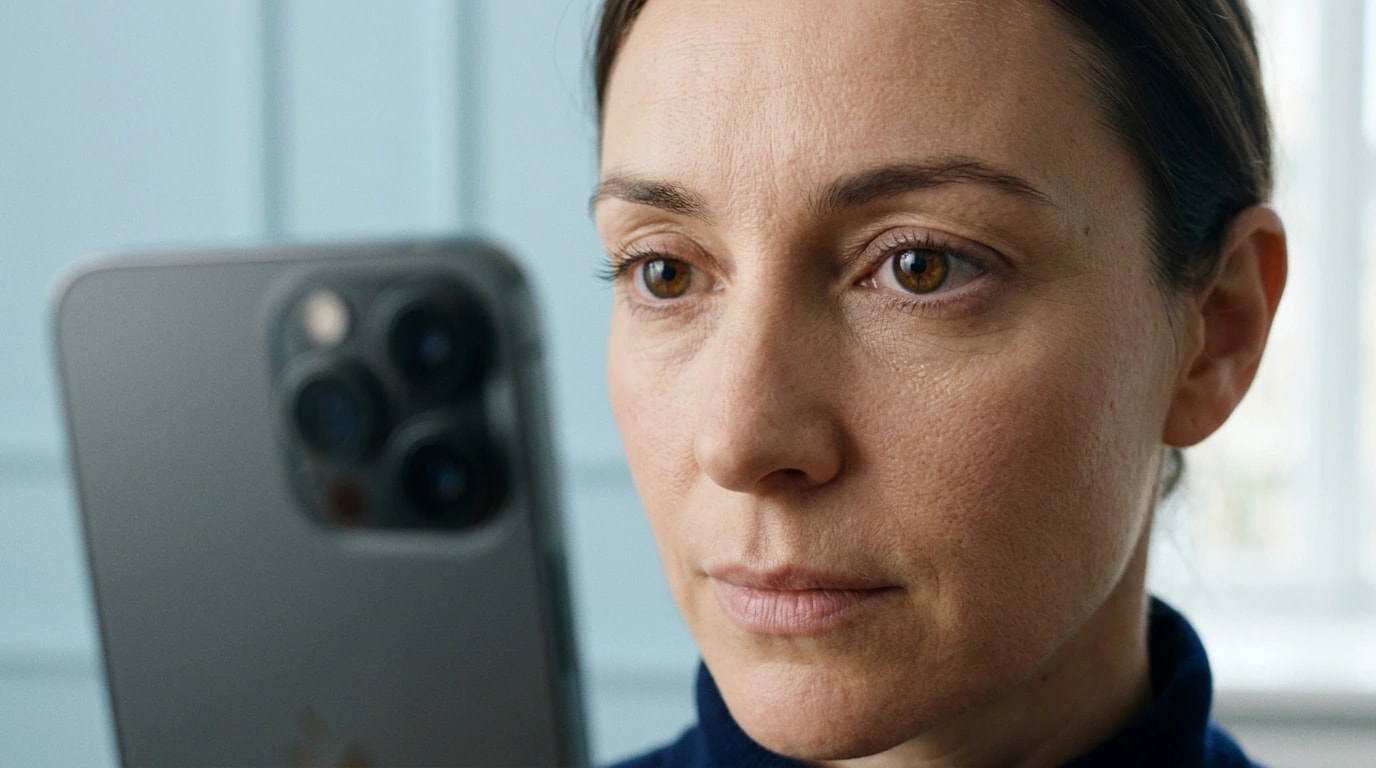
What the camera measures
Four signals, recorded on every question and scored together.
Pupil changes
How the pupil widens and narrows during each answer.
Eye movement
How the eyes move while each question is asked and answered.
Response time
How long each answer takes, question by question.
Errors and missed answers
Wrong answers to simple questions, and questions left unanswered.

Where the method came from
More than twenty years of work, from a university lab to a phone.
2002
Professors John C. Kircher and David C. Raskin, of the University of Utah, begin studying whether eye behavior can reveal deception.
2012
The technology leaves the university lab. Converus is formed to develop it for use outside the lab.
2023
Converus brings the method to the smartphone, for individuals and families.
Today
ATW is Converus Certified and offers the test with support in English and Spanish.
Our solution is built on technology developed by Converus.
Published and peer reviewed
Research on the method behind our solution has appeared in scientific journals and academic books. These are some of them.
The technology behind our test is patented.
- Journal of Experimental Psychology: Applied
- Credibility Assessment: Scientific Research and Applications (2014)
- European Polygraph (2016)
- International Journal of Applied Psychology (2016)
- Detecting Concealed Information and Deception (2018)
- Polygraph & Forensic Credibility Assessment (2019)
What this test can’t do.
Know the limits before you decide.
- It isn’t a polygraph.
- It doesn’t read minds or intentions.
- It can’t test beliefs, only specific past acts.
- It can come back indeterminate, and there is no free retest.
- It isn’t legal evidence and it isn’t a substitute for a lawyer or a counselor.
How to read any accuracy claim
Any provider can print a percentage. Before you trust one, from anyone, ask four things.
Who was tested
A study of volunteers in a lab is different from a study of real cases.
Which version
A result for lab equipment does not automatically apply to a phone app.
Who ran it
Independent researchers carry more weight than the company selling the test.
What was counted
Ask how inconclusive results were handled. Leaving them out raises the number.
ATW shares the published research instead of a single number.
Words you will see
The terms that come up in the research and in your report.
ODT
Ocular motor deception test, the name of the method. It reads eye behavior, not heart rate or breathing.
Pupil response
The way the pupil widens when the mind works harder. It happens on its own.
Comparison question
A neutral question in the test. The answers to it are the baseline for the same person.
Data quality
A check that the video and audio were clear enough to score.
Indeterminate
The result when the data is not clear enough to score.
Tell us what you need to know. We’ll tell you what it takes.
A person from ATW answers in English or Spanish.

- 1 A person from ATW replies the same day, within 24 hours at most.
- 2 We ask 2 or 3 questions to understand what you need to know.
- 3 You get your options and the price, with no obligation. If you go ahead, your test is built within one business day.
ATW is Converus Certified. The test is a credibility indicator, not a polygraph, not a diagnosis, and not legal evidence. Results can be indeterminate. A test taker must agree to take the test.